
Romance is Political
Why we should all stop watching Love Island and start a commune instead.


As I walk through the door of my empty flat, late evening, I feel the familiar pull to haze my loneliness with a cultural aperitif – every summer the beckoning is the same – Love Island.
The ritual goes: collapse onto my sofa, scroll on my phone for a bit and then type ITV Player into my laptop web browser. Usually paired with a sweet treat and a cup of tea. Fogging my loneliness further with as many forms of consumption as I can sustain.
The aim is to stifle the feeling before it gets the chance to breathe. I do not want to acknowledge the reality that I am alone, again. Eyes distracted by a screen, mouth most commonly plugged with a Magnum Double Caramel. Exploiting as many non-genital orifices as possible, not the most usual ones known to be used to mask loneliness. A different type of double penetration than might most commonly be understood.
Recently, though, air peeked through and my attempts to suffocate the truth of what I felt became futile. A spacious moment started appearing before engaging with these habits where I began to recognise the sadness that precipitated them. This always happens when I start to outgrow habits. When these feelings occur I know I have a choice; either face the change that is inevitable or be dragged alongside my resistance.
A lot of the time, truthfully, I hate Love Island. Perhaps self-righteously, I have started to list off everything more useful I could be doing with that time. Painting? Even though I don’t own any paints. Meditating? Collaging? Meal prep? Sleeping?
My main justification was that I used the show to switch off.
However, regardless of how I am “using it”, I am still allowing myself to passively consume conditioning I have tried very hard to undo within my psyche.
Two episodes in and I’ve been seduced into believing that women should look and behave a certain way in order to obtain love and approval, that to be in a hetero relationship means trying to convince a man of your worth.
Realistically, it is hard to switch off entirely when using a form of popular culture that loudly imitates all the worst things you have once told yourself about your body, your worth and your relationships with men, sex, and other women.
I wish life satisfaction came as easily as being a size 8, sporting bikini bottoms so far up my ass they can distinguish what I last ate, and subsequently being “chosen” by a semi-pro footballer from Cheshire with a non-offensive monosyllabic name probably starting with J. Or perhaps even just ‘J’.
I wish life was so easy it meant that if I had no lines on my face or gaps in my teeth or adult acne that I would be afforded the “prize” of romance.
A man – I was taught – represents the ultimate gain. Completion, love, wholeness, status, real womanhood.
Despite, in recent years, divesting from love and sex, I am old enough to know that this is not true but not always feel it.
Every year on Love Island, we watch as women endure weeks of misogyny with the hope that by the end the men will have learnt to treat them better and will be asking them to be exclusive and if they are really lucky even saying ‘I love you’. Holding out for the romantic element that purports to make all the pain endured worth it.
Has Love Island and the pursuit of romance become the modern-day opiate of the masses?
Perhaps the social structure of romance is the pipe and Love Island is what we are smoking?
We inhale that shit to try to block the beating of our heart, a heart that yearns for more than romance. For real community, for touch, for affordable living, for rites and rituals, for ancestors, for intergenerational alliances and living.
Well, even Marx, the original lefty soft boy, cheated on his wife. A case for polyamory perhaps? Or just a man who wouldn’t stand out from this year’s Love Island lineup.
Heterosexuality is a practice you can withdraw from but a dominant narrative that will continue to shout at you through every possible portal.
I am not alone in my divestment; celibacy is becoming a popular practice.
It is as political as I deem romance to be; the two are deeply interwoven.
Lots of women have moved to celibacy after feeling that men cannot meet their expectations of romance but instead seem to inflict misogyny so casually it is not worth the bother.
Women are sold the idea of romance to keep us dependent on a system and institutions that were never built for us. It allows us to tolerate a reality that is not for us with the promise of a love that will save us. Marriage is known to increase the life expectancy of a man and decrease that of a woman.
It is only in the past few generations that the idea of marrying for love has become prevalent. A collective amnesia seems to have overtaken our culture; we purport and feign that marriage is for love when in reality, most commonly, it is a milestone, a tradition, for status and something that most embark on for much more practical reasons, like these days – getting a house.
The current political and economic climate has put young people in crisis. We are crippled by stagnant wages, a housing crisis, and a furiously competitive job market.
It is this external insecurity that triggers a desire within the collective to pursue tradition, because tradition was once safe, secure, and worked for our parents. We are the first generation whose living standards have gone down, not up, and so tradition looks even more alluring when the future is difficult and uncertain. Alva Gotby stated that whenever the political and economic climate is unstable people start to become nostalgic for what has been and this is a fertile breeding ground for fascism.
People fall back into tradition because it is easier to forge than a new radical alternative. For those women who aren’t getting married there is an idea it is easier to stop dating men and be alone entirely but the radicalism stops there and new alternatives are perhaps not sought beyond financial security and independence.
Sophie Lewis, author of Abolish The Family, recently wrote an essay about heteropessimism and heterofatalism that stated this wave of faux-feminism that we’re in has made no real attempt to embody what type of social relations come next outside of marriage or the nuclear family.
It was this year that I started to really understand that romance is political and feel it in my body how true that is. This sentiment is flooding the zeitgeist with writers such as Shon Faye, Sophie Lewis, Melissa Febos, Alva Gotby and Sophie K. Rosa.
As a perpetually single woman my aloneness has forced me to find love in other ways. I have never had the privilege of relying on a partner for love or financial ease, and it is a privilege. There is no one to split my bills with or to turn to when I have a family crisis.
Still, my aloneness has radicalised me, deconditioned me; if I hadn't been single for so long, I would not have expanded my concept of love and community. I would not have remained curious about social relations nor come in touch with such concepts of cosmic love, desiring to build a commune, and abolishing the family in the aim to build true radical care.
I see love as a faculty and a process, as a feeling and as action not tied to any one individual, it can and should be a standard we try to cultivate in every single interaction we have. Still, I have also felt how hard it is to be a single unit amongst a world that rarely has socially acceptable communities for people who do not fit or want to fit into convention. We are not meant to, and logistically cannot do the work of building community on our own.
However, I have seen how my individual belief systems - although conditioned - of putting men on pedestals to save me, and viewing being chosen by a man for a relationship as access to “love” and community, are not liberation.
Thus, I have decided I do not just want romantic and sexual liberation from men, I want complete and utter psychic liberation from the patriarchy, and from ideology that limits our ideas of love to one romance, one person and heterosexuality.
Gotby and Lewis are united in their understanding that other forms of housing and ways of life must exist outside of partnership and the nuclear family; however, even our architecture is set up in favour of tradition. Gotby noted that master bedrooms are a common fixture in most homes, encouraging the idea of housing being something only embarked on with partners and a family rather than other groups of people simply forming a housing co-op or people who want to live together outside of tradition.
For Lewis, it is not enough for heterosexual women to balk tradition by refusing to have sex, date, or marry men. This, she states, is not really feminism; if we all become Carrie Bradshaw and buy shoes instead of having relationships or babies, we are repackaging separatist capitalism and seeing the illusion of freedom where there is none.
Here, we can look to And Just Like That, the reboot of Sex & The City, as metaphor; it ain’t lookin’ good for Carrie – getting the horn over a man writing a Thatcher biography, naming cats after shoes.
Thatcher was right, there is no such thing as society; however, this was a spell she was casting by dismantling the unions, aggressively growing free markets, privatising everything apart from your fucking nan, and stoking neoliberal sentiments.
We have been sold the idea that hyper-individualism is (sexual) liberation and I can’t think of a more apt popular culture reference than bedding a man who is so intimately acquainted with the Iron Lady he made writing about her his day job.
Sex & The City is fun and frivolous; it is not a manifesto on how to be a modern woman though, and I think we naively convince ourselves sometimes it is, because it is cuter than facing the alternative; we need to build something new!
So, what is the alternative? Women who choose not to date men need to be building radical alternatives and everyone across the board needs to decentre romance, remove it from a pedestal and give as much thought and care to all types of relationships.
Women are known for having stronger relationships and networks than men, something that has become apparent with the male loneliness epidemic, and we are targeted as the hearts and minds of communities.
So, how to build radical community?
These are my lighthearted tips:
Break down the conditioned belief that romance is where you earn completion, transcendence, and security. This can be done through a nifty trick I learnt whilst being into witchcraft called “deepest fear inventory” by Carolyn Eliot (now known as Carolyn Lovewell). My favourite prompt to use is “I deeply hate and resent being free from patriarchal conditioning…” and then fill in the blanks. The premise is that we don’t have what we want because we are actually secretly deeply scared of it. Tradition may not be what we want but it might be less scary than facing the an unknown future. This is based off of Jungian psychoanalysis and the idea that our unconscious has a part to play in creating our reality.
One of his most well known quotes is: “If you do not make the unconscious concious it will rule your life and you will call it fate”. This practice aims to make the unconscious within conscious so we can move past it. Obvs there is nuance to this - cultural conditioning has a massive part to play and no one person is responsible for systems of oppression.
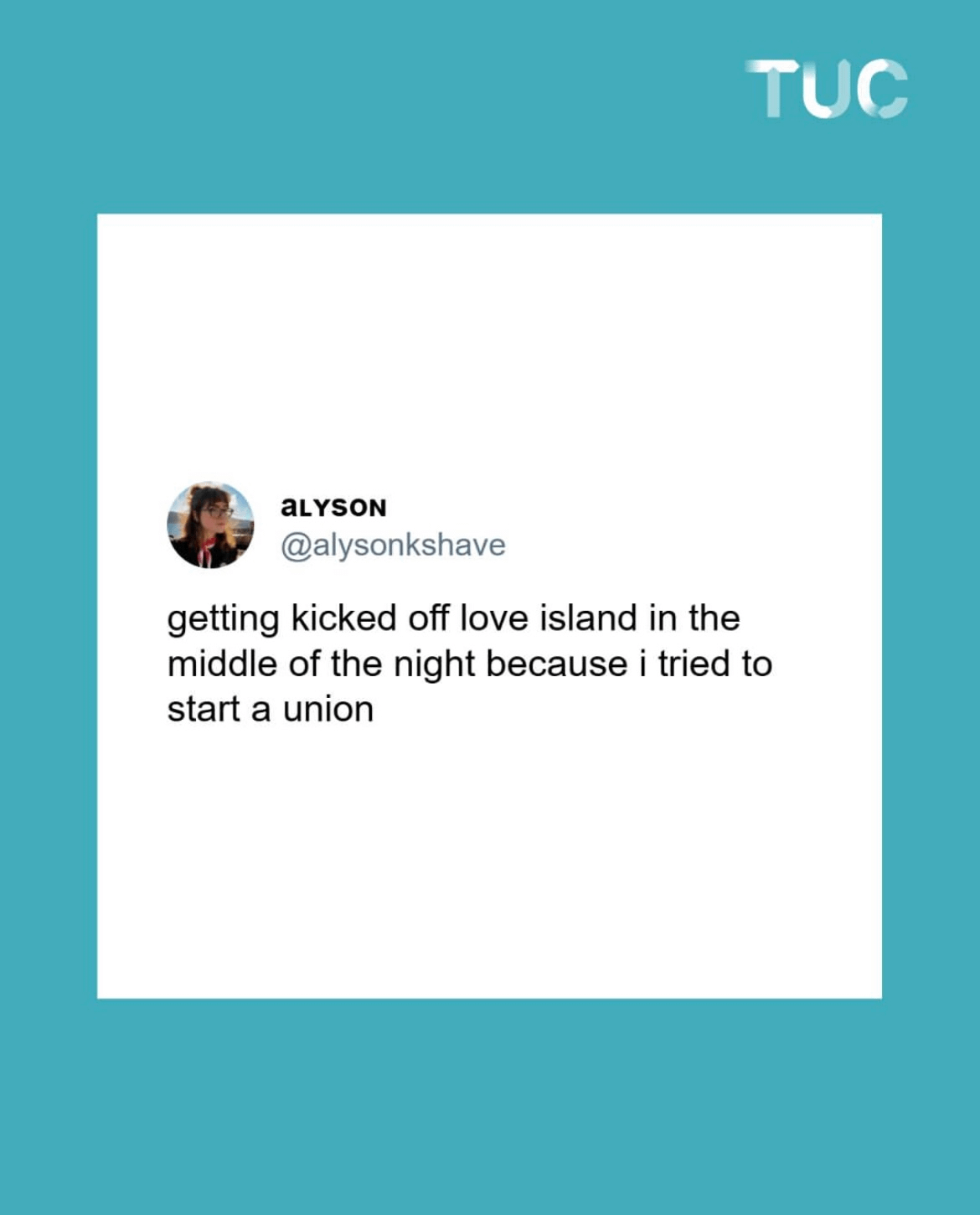
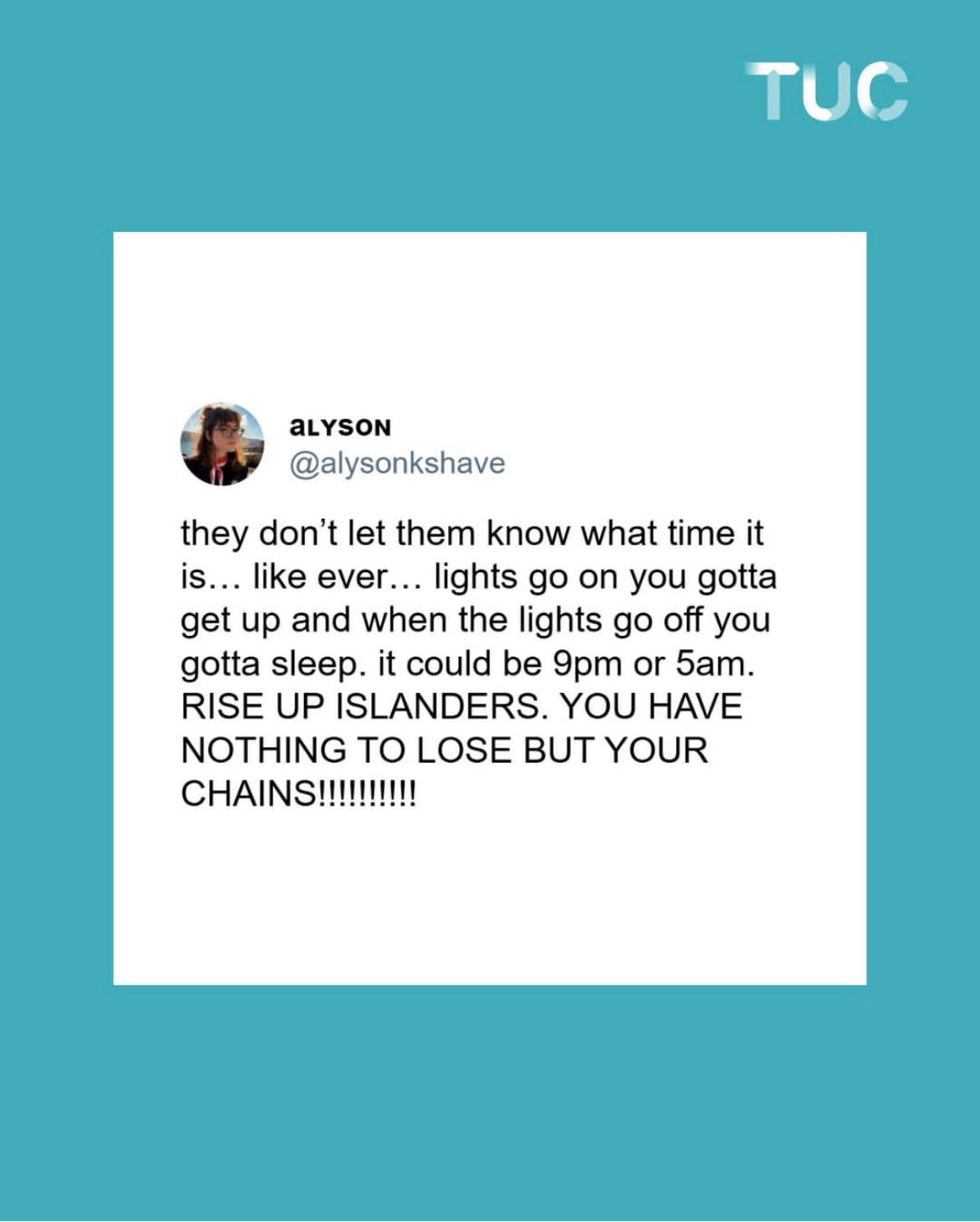
Unionise – join a trade union. If as many people joined a trade union as watched Love Island, we would be laughing. How can we even enjoy (the illusion of) romance if we have to work all the time for such little pay? You are too burnt out to shag and too poor to go on fun little dates. You may not see how romance and unions are directly related but a better quality of life for all will lead to the idea that love is communal and not something that is earned solely from one individual.
Be of service! View love as an action of which every interaction is an example. Volunteer and stand with people in your community who have less than you and feel your inherent similarities and shared humanity as the love that it is. I have never known love and service better than grassroots campaigning!
Pay it forward – buy someone a coffee or a book or tell the store that you want to do so for someone who has less than you. If you are going to buy books, I have a reading list for deconstructing romantic love as liberation. The Broadway Bookshop in Hackney, Broadway Market has a pay it forward scheme. You can get a book for free if you are low income, or you can purchase one for someone if not. And you are supporting an indepedent bookstore instead of Bezos.
Repair after ruptures with friends, family, and colleagues. We live in a culture that cuts people off and ghosts due to impatience and innocuous grievances. I have done it myself and I do not recommend it. I am not advocating for accepting disrespect or abuse, but at the very least address and talk through conflict eye to eye, person to person, body to body.

@alicesparklykat (on instagram)
If you have skin hunger – get massages and ask for hugs and go to cuddle workshops. Asking for hugs is free! Cuddle workshops in London are quite cheap but you can always massage yourself. I have started giving myself all-body massages and it has changed my life.
Start a commune – I don’t know how to do this so reach out to me if you’re down and we can give it a go. I’ve accidentally joined a cult before so I have experience, strength, and hope able to guide us away from that. Or we get loads of us to infiltrate Love Island, build a commune and split the cash prize between everyone involved.
If you enjoyed this essay please consider buying me a coffee, as well as liking, sharing and commenting! xoxoxo
Reading list for change:
Existential Kink: Unmask Your Shadow and Embrace Your Power
Carolyn Elliot (now known as Lovewell)
Caliban and the Witch: Women, the Body and Primitive Accumulation
Silvia Federici
They Call It Love: The Politics of Emotional Life
Feeling At Home: Transforming The Politics of Housing
Both by Alva Gotby
The Dry Season: A Memoir of Pleasure In a Year Without Sex
Melissa Febos
Shon Faye
Sophia K Rosa.
Abolish the Family: A Manifesto For Care and Liberation
A Pox on Both Your Fatalism’s for the The Erotic Review
Sophie Lewis
What a great essay. Really thought provoking and I love the ideas!
well that was worth the ritualising to read if i dare say so myself